|
| |
|
Galapagos
Islands |
|
|
|
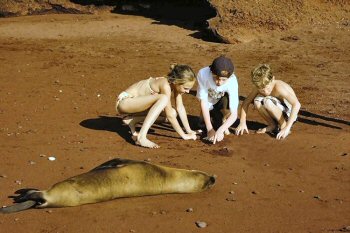
This is one of the few wildlife sanctuaries
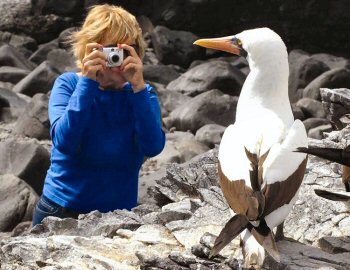
left where animals have no fear of man and can be observed closely. You
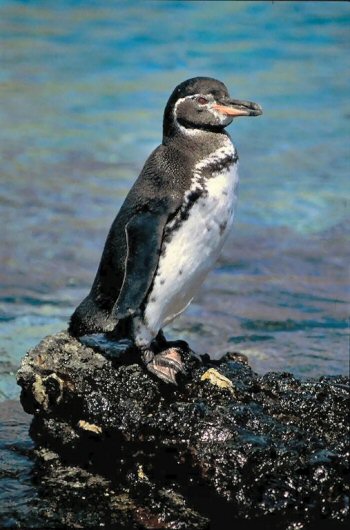
can swim with the sea lions, turtles and penguins, or get within
wingspan distance of a waved albatross feeding her chick. Whether
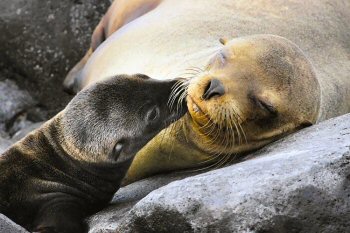
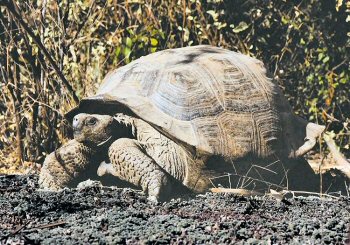
watching a giant tortoise slowly amble by or being befriended by a sea
lion pup, your first encounter with wildlife will captivate you making
it a truly magical and unforgettable experience.
 The Galapagos archipelago lies on the
Equator 600 miles off the coast of Ecuador in
the Pacific Ocean and
consists of 13 large islands with many smaller ones. First formed by giant volcanoes rising out of the sea about five million years ago, they
are influenced by both hot and cold currents helping to create a variety
of marine life found nowhere else in the world. Since the islands have
never been connected to the mainland, all species found there must have
crossed 600 miles of ocean either by swimming, flying or perhaps
floating across on vegetable rafts. Egg larvae or seeds could have
traveled less conspicuously in animals stomachs or stuck onto birds
feathers. The Galapagos archipelago lies on the
Equator 600 miles off the coast of Ecuador in
the Pacific Ocean and
consists of 13 large islands with many smaller ones. First formed by giant volcanoes rising out of the sea about five million years ago, they
are influenced by both hot and cold currents helping to create a variety
of marine life found nowhere else in the world. Since the islands have
never been connected to the mainland, all species found there must have
crossed 600 miles of ocean either by swimming, flying or perhaps
floating across on vegetable rafts. Egg larvae or seeds could have
traveled less conspicuously in animals stomachs or stuck onto birds
feathers.
Thus, over many years, the animals and plants that migrated there have
adapted themselves to Galapagos conditions and evolved differently from
island to island in order to survive creating many endemic species.
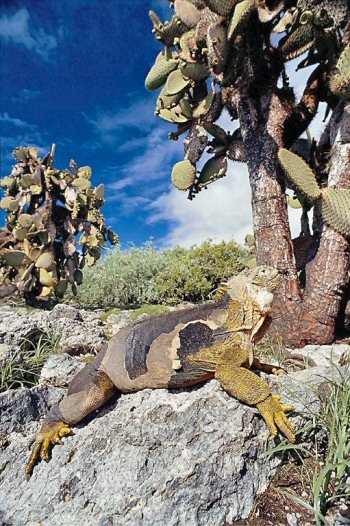
Today, over half the plants and most of the reptiles are found nowhere
else in the world and 97% of the archipelago has been declared a
National park, making it one of the most sought after and unique
wildlife destinations in the world.
 The islands were first visited by pirates
who named them after English Kings,
noblemen or sea captains. The
earliest charts gave the islands both Spanish and English names and the
Ecuadorian government assigned their official names in 1892 so an island
can have a Spanish, English and official name. Galapagos means ‘saddle
back’ in Spanish and is used to describe the shape of the shell found on
a particular species of giant tortoise. Historically, buccaneers named
them Las Islas Encantadas, ‘the bewitched islands’ because the strong
and variable currents made navigation difficult and passing mists made
the islands appear and disappear as if by magic. The islands were first visited by pirates
who named them after English Kings,
noblemen or sea captains. The
earliest charts gave the islands both Spanish and English names and the
Ecuadorian government assigned their official names in 1892 so an island
can have a Spanish, English and official name. Galapagos means ‘saddle
back’ in Spanish and is used to describe the shape of the shell found on
a particular species of giant tortoise. Historically, buccaneers named
them Las Islas Encantadas, ‘the bewitched islands’ because the strong
and variable currents made navigation difficult and passing mists made
the islands appear and disappear as if by magic. |
|
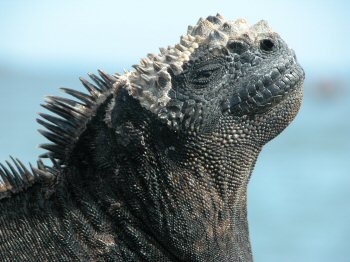
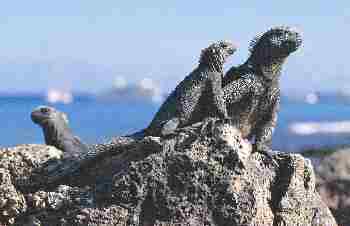 The uniqueness of the Galapagos islands is
reflected underwater where almost one quarter of the marine life is
found nowhere else in the world. Encounters with sea turtles, spotted
eagle rays or marine iguanas will be numerous and you will usually see
these swimming alongside reef fish and penguins darting in front of you
searching for food. Diving enthusiasts will not be disappointed and will
see something different on every dive where the unexpected happens on a
regular basis – like seeing up to eight whale sharks in one week! It is
not unusual to find yourself surrounded by a school of hammerheads
whilst observing the gracefulness of a giant manta ray slowly gliding
by. Life is never dull and the friendliness of the Galapagos sea lion
ensures that you are accompanied by at least one or two on almost every
swim. The uniqueness of the Galapagos islands is
reflected underwater where almost one quarter of the marine life is
found nowhere else in the world. Encounters with sea turtles, spotted
eagle rays or marine iguanas will be numerous and you will usually see
these swimming alongside reef fish and penguins darting in front of you
searching for food. Diving enthusiasts will not be disappointed and will
see something different on every dive where the unexpected happens on a
regular basis – like seeing up to eight whale sharks in one week! It is
not unusual to find yourself surrounded by a school of hammerheads
whilst observing the gracefulness of a giant manta ray slowly gliding
by. Life is never dull and the friendliness of the Galapagos sea lion
ensures that you are accompanied by at least one or two on almost every
swim.
Life on board is relaxed and informal and
by the end of your cruise you will have become quite a specialist on
bird, marine and reptile life found in these waters. Most cruises last
for about a week although shorter and longer ones are available on
request.
All flights to Galapagos go via Ecuador so
it is a good opportunity to sample some of its cultural heritage with
its beautiful churches, cobbled streets and colonial haciendas. It is
one of the smallest countries in South America containing the richest
concentration of birds, orchids and butterflies and you don’t have to go
far to see them. It is possible to combine a cruise with a visit to the
Amazon rainforest where you can stay in an Eco Lodge and relax in your
hammock, after a day’s activities and listen to jungle sounds or
contemplate the world.
Another option is to explore the Avenue of
the Volcanoes or trek to nearby snow-capped Cotopaxi, the highest active
volcano in the world. You may want to do something more relaxing though,
like an Andean railway trip along the Devil’s Nose or a visit to a local
market where you can see wood carving, textile weaving or the making of
Panama hats.
Whatever your choice,
whether alone or in a group, trips are tailor-made to suit individual
requirements. You will not have time to see everything on your first
visit – wildlife enthusiast, photographer, holidaymaker or diver, the
Galapagos will inspire you in many of the ways it did Darwin and your
understanding of the natural world will take on a different perspective
leaving you bewitched and wanting to return to these unique, enchanted
islands once more. |
|
 They were officially discovered by the
Bishop of Panama, Tomas de Berlanga in 1535 when during his journey from
Panama to Peru, his boat sailed off course and arrived in the Galapagos.
For the next 300 years whalers, pirates and sealers used them for
shelter and fresh water taking thousands of giant tortoises on their
ships to be kept alive for up to a year without food to provide sailors
with fresh meat during their long
periods at sea. Fur seals were
mercilessly hunted for their pelts which decimated their population in
the process. They were officially discovered by the
Bishop of Panama, Tomas de Berlanga in 1535 when during his journey from
Panama to Peru, his boat sailed off course and arrived in the Galapagos.
For the next 300 years whalers, pirates and sealers used them for
shelter and fresh water taking thousands of giant tortoises on their
ships to be kept alive for up to a year without food to provide sailors
with fresh meat during their long
periods at sea. Fur seals were
mercilessly hunted for their pelts which decimated their population in
the process.
The islands first came to world attention
when Charles Darwin visited them during his world voyage in HMS Beagle
in 1835. His book on the Origin of Species published in 1859 based on
his observations made during his five week visit gave the islands the
world reputation as the living laboratory of evolution.
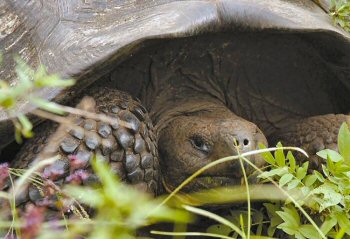 With its spectacular wildlife and
hauntingly dramatic landscape it is not difficult to
see why these
remote islands have served as an inspiration to both naturalists and
scientists. In those days the Galapagos were virtually inaccessible
being very expensive and difficult to get to with no real means by which
the traveler could comfortably see the islands. Also the interest in the
natural universe and issues such as wildlife conservation weren’t as
widespread as they are now. Things have changed since then and today it
isn’t difficult to get to the islands at all with daily flights from
mainland Ecuador. With its spectacular wildlife and
hauntingly dramatic landscape it is not difficult to
see why these
remote islands have served as an inspiration to both naturalists and
scientists. In those days the Galapagos were virtually inaccessible
being very expensive and difficult to get to with no real means by which
the traveler could comfortably see the islands. Also the interest in the
natural universe and issues such as wildlife conservation weren’t as
widespread as they are now. Things have changed since then and today it
isn’t difficult to get to the islands at all with daily flights from
mainland Ecuador.
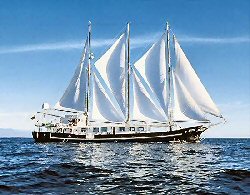
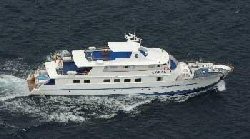
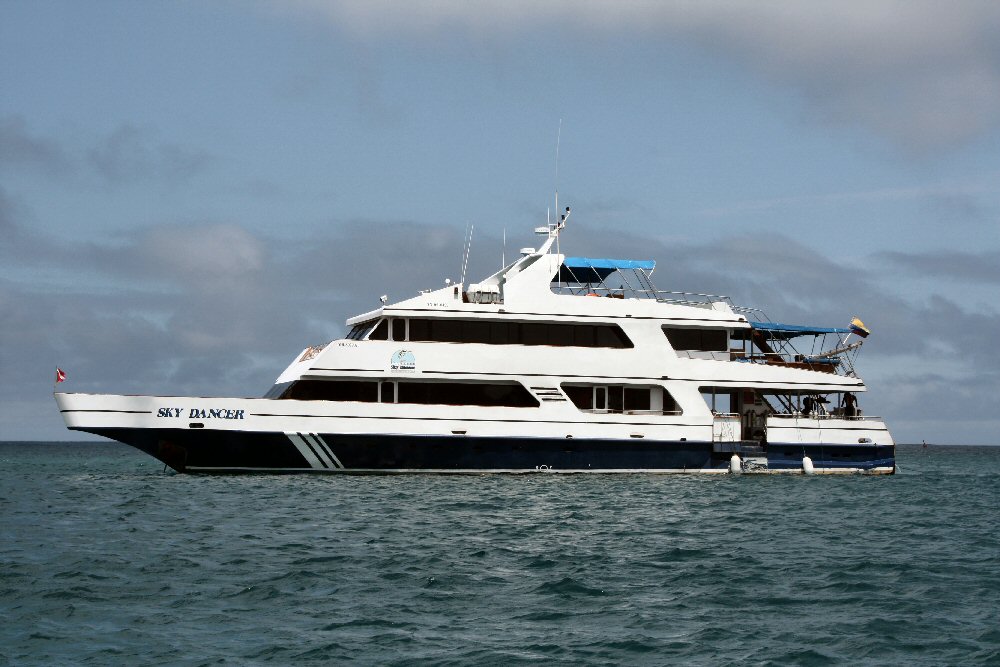
 The best way to see the wildlife is by
taking an organised cruise as it is the only way to gain access to many
of the landing sites which can only be visited with a guide from the
Darwin Research Centre. There are many categories of boats ranging from
economy to luxury carrying from 12 to 100 passengers. Luxury boats are
more spacious with ample dining areas – often eating ‘al fresco,’ have
roomy, air conditioned cabins and are generally more comfortable at sea.
However, which ever boat you choose, whether an elegant traditional
sailing yacht or a motor vessel, the single most important influence on
your cruise will be your naturalist guide who will be vital in
introducing you to the islands. The best way to see the wildlife is by
taking an organised cruise as it is the only way to gain access to many
of the landing sites which can only be visited with a guide from the
Darwin Research Centre. There are many categories of boats ranging from
economy to luxury carrying from 12 to 100 passengers. Luxury boats are
more spacious with ample dining areas – often eating ‘al fresco,’ have
roomy, air conditioned cabins and are generally more comfortable at sea.
However, which ever boat you choose, whether an elegant traditional
sailing yacht or a motor vessel, the single most important influence on
your cruise will be your naturalist guide who will be vital in
introducing you to the islands.
A typical day on board might consist of
going ashore after breakfast by dinghy or ‘panga’ as they are known
locally where you will have a dry or wet landing depending on the
particular site and on occasion you may be greeted by a friendly sea
lion.
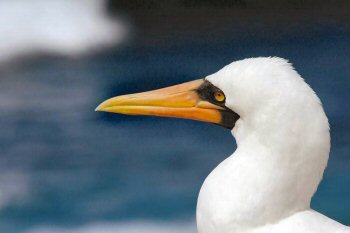
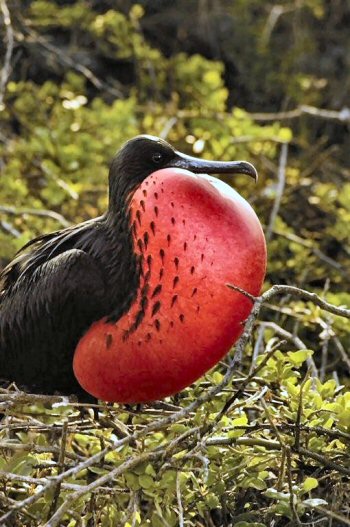 The prolific bird life includes blue and
red footed boobies and magnificent frigatebirds with their inflated red
pouches which they display during courtship in a bid to attract a
passing mate. Nicknamed ‘pirates of the sea’ they will often bully
smaller
birds into dropping their food which they will then swoop in mid
air to catch the stolen meal. This happens because frigate birds have
very small preening glands and are not able to secrete enough oil to
waterproof their feathers and are therefore are unable to dive
underwater to catch their prey. Their seven feet wingspan combined with
the largest wingspan to weight ratio of any bird provides aerobatics
which never fail to entertain. Blue footed boobies equally impress with
their fantastic rocket dives which they do in groups in perfect synchronisation. The prolific bird life includes blue and
red footed boobies and magnificent frigatebirds with their inflated red
pouches which they display during courtship in a bid to attract a
passing mate. Nicknamed ‘pirates of the sea’ they will often bully
smaller
birds into dropping their food which they will then swoop in mid
air to catch the stolen meal. This happens because frigate birds have
very small preening glands and are not able to secrete enough oil to
waterproof their feathers and are therefore are unable to dive
underwater to catch their prey. Their seven feet wingspan combined with
the largest wingspan to weight ratio of any bird provides aerobatics
which never fail to entertain. Blue footed boobies equally impress with
their fantastic rocket dives which they do in groups in perfect synchronisation.
These islands are truly an ornithologist’s
paradise. Photographers will enjoy the tameness of the animals and will
have countless opportunities to get some of their best shots without
ever having to reach for a zoom lens.
On returning to your boat there may be
time for a pre-lunch swim and afterwards sailing to another visitors
site – perhaps up to two hours away – an opportunity to a siesta on deck
until you reach your destination. Dolphins may often accompany your boat
riding the bow wave in twos and threes. Each shore visit is a few hours
long giving plenty of time for snorkelling during the day. Swimming in
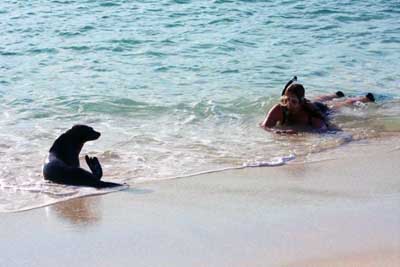
the Galapagos can be full of surprises – a harem of sea lions may
gracefully weave their way around you often coming up to your mask with
the playfulness of a dog!
 |
|
About the
author
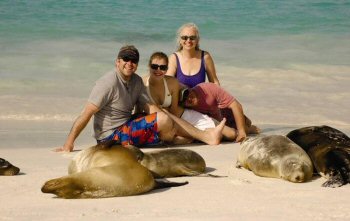 Ania Mudrewicz first visited
Ecuador in 1977 and her love of wildlife, sailing and photography
naturally drew her to the Galapagos Islands. She established Galapagos
Classic Cruises (www.galapagoscruises.co.uk) over 15 years ago and
continues to visit the islands regularly where she loves to swim with
the penguins and sea lions. A donation is made on behalf of every
passenger who travels to the Galapagos and this is used to promote all
conservation issues on the islands. She also organizes cruises hosting
BBC Presenters and on these trips, passengers have the additional
benefit of joining a celebrity at no extra cost. Ania Mudrewicz first visited
Ecuador in 1977 and her love of wildlife, sailing and photography
naturally drew her to the Galapagos Islands. She established Galapagos
Classic Cruises (www.galapagoscruises.co.uk) over 15 years ago and
continues to visit the islands regularly where she loves to swim with
the penguins and sea lions. A donation is made on behalf of every
passenger who travels to the Galapagos and this is used to promote all
conservation issues on the islands. She also organizes cruises hosting
BBC Presenters and on these trips, passengers have the additional
benefit of joining a celebrity at no extra cost.
 ECO note ECO note
As
early as 1934 the Ecuadorian government set aside some of the islands as
wildlife sanctuaries but it was not until 1959 that the Galapagos was
declared a National park. The Charles Darwin Research Centre on Santa
Cruz Island opened in 1962, mainly to ensure the conversation of a
unique ecosystem, preserve its wildlife and to encourage educational and
scientific research.
 In 1986, the
Ecuadorian Government granted further protection to the islands by
creating the Galapagos Marine Resources Centre. A further law was passed
in 1998 to control immigration from the mainland and to restrict tourism
to smaller groups. Because of the increase in tourism, special
guidelines were introduced to protect the fragility of the islands and
their inhabitants. The rules are sensible and necessary, and will not
impinge on the visitors’ enjoyment of the Galapagos, but will ensure
that they do not destroy the very wildlife that they have come to see. In 1986, the
Ecuadorian Government granted further protection to the islands by
creating the Galapagos Marine Resources Centre. A further law was passed
in 1998 to control immigration from the mainland and to restrict tourism
to smaller groups. Because of the increase in tourism, special
guidelines were introduced to protect the fragility of the islands and
their inhabitants. The rules are sensible and necessary, and will not
impinge on the visitors’ enjoyment of the Galapagos, but will ensure
that they do not destroy the very wildlife that they have come to see.
 Choosing a cruise:
There are a variety of boats operating in
Galapagos carrying from 12 to 100 passengers and itineraries may vary
from boat to boat. The most exciting islands include Espanola, Genovesa
and Fernandina, so ideally, your cruise should include at least two of
these islands. Additionally, there are a number of specialist cruises,
including birdwatching, photography and diving. There are a handful of
comfortable livaboards that concentrate mainly on diving and visit the
northern islands of Wolf and Darwin where whale sharks and hammerheads
are prolific. Choosing a cruise:
There are a variety of boats operating in
Galapagos carrying from 12 to 100 passengers and itineraries may vary
from boat to boat. The most exciting islands include Espanola, Genovesa
and Fernandina, so ideally, your cruise should include at least two of
these islands. Additionally, there are a number of specialist cruises,
including birdwatching, photography and diving. There are a handful of
comfortable livaboards that concentrate mainly on diving and visit the
northern islands of Wolf and Darwin where whale sharks and hammerheads
are prolific.
Visas:
No visas required for UK nationals who
automatically get 90 days on entering Ecuador.
Health:
No inoculations are needed for Galapagos
although if you are going to visit the Amazon or other areas of mainland
Ecuador, certain vaccinations are recommended.
Flights:
There are no direct flights from the UK to
Ecuador although you can travel there with KLM via Amsterdam, Iberia via
Madrid, American Airlines via Miami and Continental via
Houston. Galapagos flights are automatically booked together with the
cruise and these fly daily from Quito and Guayaquil. On arrival in
Galapagos, your naturalist guide will be waiting for you to transfer you
to the boat of your choice and embark on the experience of a lifetime!
When to go:
As Galapagos is on the
Equator, there is something interesting to see all year round, although
air temperatures are at their highest from January to April sometimes
reaching 32 degrees! After June the weather gets a bit cooler and the
sea becomes a little choppier from July to October, with sea
temperatures dropping as low as 18 degrees; it is at this time that
marine life becomes more prolific and it is the best time to see whale
sharks. Due to variations in sea temperatures throughout the islands, a
5-7 mm wetsuit is recommended. |
| |
|
|
| |
|
|

|
|
|
| Galapagos from £1,599 |
for 12 days |
ex flights |
|
We organise cruises from 4-15 days
and the itineraries shown are only a few examples of what we can put
together for you. Whether you are travelling on your own or in a group, all
tours can tailor made to suit individual requirements - please call 020
8933 0613 to speak to a specialist or e mail info@galapagoscruises.co.uk to
organise your dream trip. We also have many
special offers which are changing continually, so please contact us for the
latest updates. |
|
|
|
|
|
|
|
|
|
|
|